
Kilowatts & Kilowatt-Hours
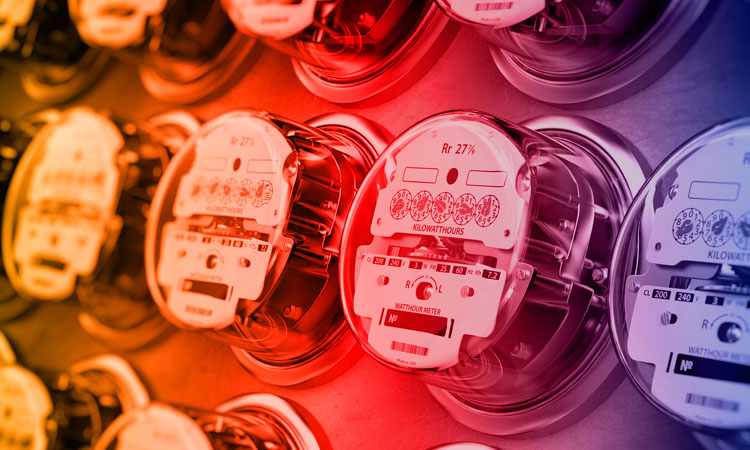 Simply stated, a kilowatt (kW) is a unit of power; a kilowatt-hour (kWh) is a unit of energy used over a period of time. For simplicity, we refer to kW as power — or capacity, demand or load — and kWh as energy — also referred to as consumption or usage. The kW capacity, or demand, is the rate at which energy is consumed.
The following example may be helpful:
A single 60-watt light bulb operating for 10 hours would use 600 watt-hours, or 0.6 kWh of energy. This is exactly the same amount of energy used if 6 100-watt light bulbs are operated for 1 hour. However, the electrical capacity or demand required to supply 6 100-watt light bulbs would be 10 times greater than required to operate the single 60-watt light bulb.
- 1- 60-watt light bulb for 10 hours: Demand = 60W/1000 = 0.06kW, Energy = 60W/1000 * 10 hours = 0.6kWh
- 6- 100-watt light bulbs for 1 hour: Demand = 6 * 100W / 1000 = 0.6kW; Energy = 6 * 100W / 1000 = 0.6kWh
The same principle applies to how residential members use their household appliances. If someone bakes cookies during the same time period they dry clothes, the electrical demand is the sum of the individual demands of each appliance. As with the 6 light bulbs, the kW demand in this case is much higher than if that same person bakes cookies, turns off their oven, and then starts the dryer.
Here is an example:
In the first case, with both appliances in use at the same time, the total kW demand is the sum of demands of both appliances. That is 3.8 kW plus 5.5 kW, or 9.3 kW. Because both appliances are on for an entire hour in our example, the total energy use is 9.3 kW × 1 hour, or 9.3 kWh. In the second case, in which the stove and dryer are not in use at the same time, the kW demand will NOT be the sum of the demands, but instead reflect the highest demand of the two appliances — i.e., the 5.5 kW required for the dryer. However, the total energy consumed is 9.3 kWh in both scenarios.
- 3800-watt oven and 5500-watt clothes dryer for 1 hour: Demand = 3800 + 5500 / 1000 = 9.3kW, Energy = 3800 + 5500 / 1000 * 1 hour = 9.3kWh
- 3800-watt oven for 1 hour: Demand = 3800 / 1000 = 3.8kW, Energy = 3800 / 1000 * 1 hour = 3.8kWh
- 5500-watt clothes dryer for 1 hour: Demand = 5500 / 1000 = 5.5kW, Energy = 5500 / 1000 * 1 hour = 5.5kWh
The Journey of Electricity
Electricity plays an essential role in everyday life. The system that delivers your electricity is often described as the most complex machine in the world, and it’s known as the electric grid.
The electric grid is a network of powerlines, transformers, substations and other infrastructure that spans the entire country. Electricity is created at power plants through various sources such as natural gas, solar, wind and nuclear energy. In the U.S., more than 11,000 power plants deliver electricity to the grid.
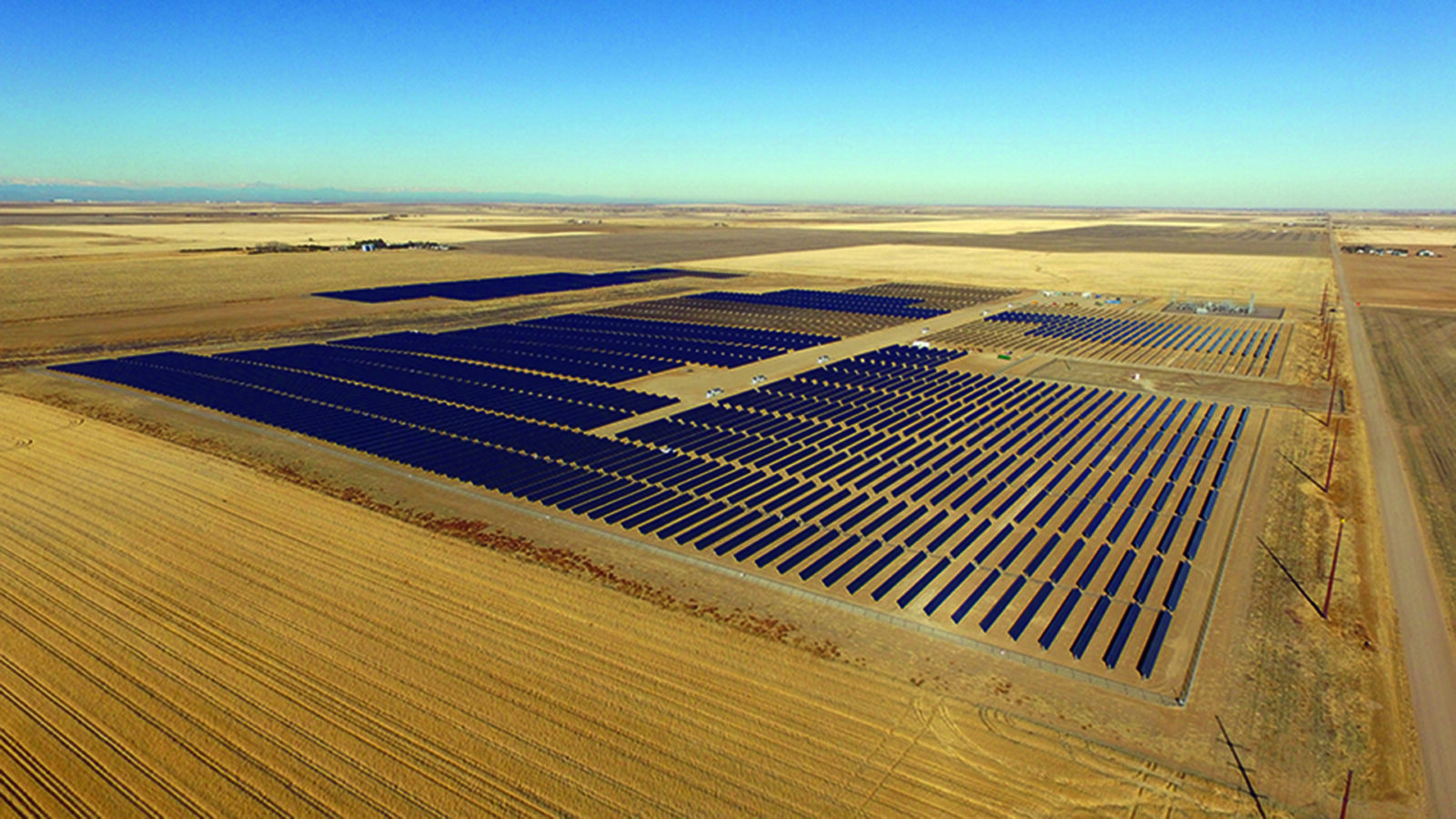
It’s important to know that CORE is a distribution-only cooperative. That means we do not generate power. Instead, we purchase power under long-term agreements with several providers. We also purchase the output of several utility-scale solar facilities, and own and receive a share of the generated power from the Xcel-operated Comanche Unit 3, a supercritical, pulverized coal plant in Pueblo. CORE owns and operates transmission and distribution lines, substations and other equipment that helps carry and deliver this power within our service area.
Let’s go over how CORE safely delivers purchased power to your home or business:
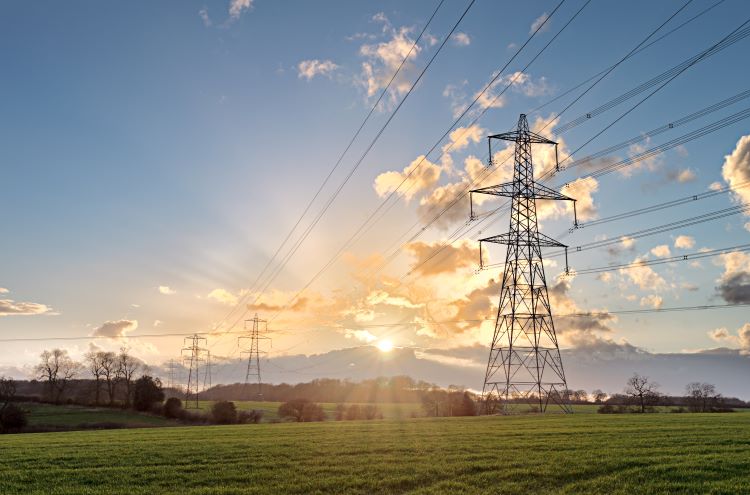
- Transmission lines and towers provide the long–distance connections between power plants and substations. These lines act as highways for electricity and carry power at a higher voltage. CORE owns and operates a 115–kV transmission network that is on the lower side of transmission voltages, which range from 69 kV to 765 kV.
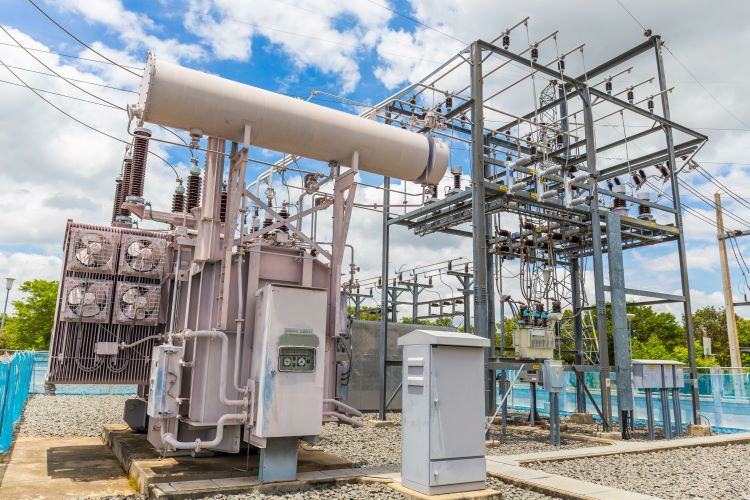
- Substations are like pit stops along the transmission highway, and adjust the voltage of electricity before it is distributed. They play a critical role in the management of power flow and ensure electricity is safe for use in homes and businesses.
- Distribution lines carry electricity from substations to homes, schools, businesses and other service points. Distribution transformers, which look like metal buckets on the tops of power poles or large green boxes on the ground, further reduce voltage to levels suitable for household appliances and electronic devices.
Electricity travels great distances to be available at the flip of a switch. We’re proud to be an essential part of powering your everyday life.